




0.90
Best AUC achieved by the proposed curriculum-learning meta-training approach for breast screening from DCE-MRI.
Research & Publications
MICCAI 2018
Gabriel Maicas, Andrew P. Bradley, Jacinto C. Nascimento, Ian Reid, Gustavo Carneiro
2018
Gabriel Maicas, Andrew P. Bradley, Jacinto C. Nascimento, Ian Reid, Gustavo Carneiro
2018
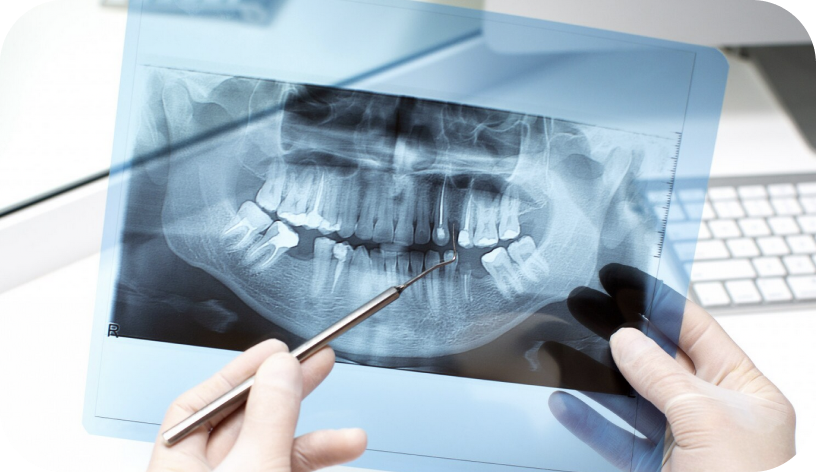
This paper proposes a training strategy for medical image analysis systems inspired by how radiologists are trained. Instead of learning from one large static dataset, the model is meta-trained on multiple related tasks with small training sets and increasing task difficulty.
The authors extend model-agnostic meta-learning by introducing teacher-student curriculum learning for task selection. This allows the system to focus on tasks where learning progress is still improving, better mimicking radiologist-style training programs.
The approach is evaluated on weakly supervised breast screening from dynamic contrast-enhanced MRI. It achieves stronger classification performance than DenseNet, multiple-instance learning, and multi-task learning baselines.
“This work shows that medical AI can benefit from training strategies that resemble clinical education: structured, progressive, and focused on rapid adaptation to new diagnostic tasks.”
Editorial research summary
OrthoAI research content adaptation
Best AUC achieved by the proposed curriculum-learning meta-training approach for breast screening from DCE-MRI.
Improvement over the best baseline AUC of 0.85 from multiple-instance learning and multi-task learning.
Meta-training used five related breast MRI classification tasks to improve adaptation and downstream screening performance.
The model is meta-trained across multiple classification tasks, each built from small training and validation sets. This encourages the model to learn how to adapt quickly, rather than simply fit one narrow diagnostic problem.
After meta-training, the learned initialization is fine-tuned for the target breast screening task: distinguishing healthy or benign cases from malignant cases.

The paper compares random task sampling, all-task sampling, multi-armed bandit sampling, and teacher-student curriculum learning.
Curriculum learning selects tasks based on improvement in model performance, allowing the training process to emphasize tasks that still provide useful learning signal.
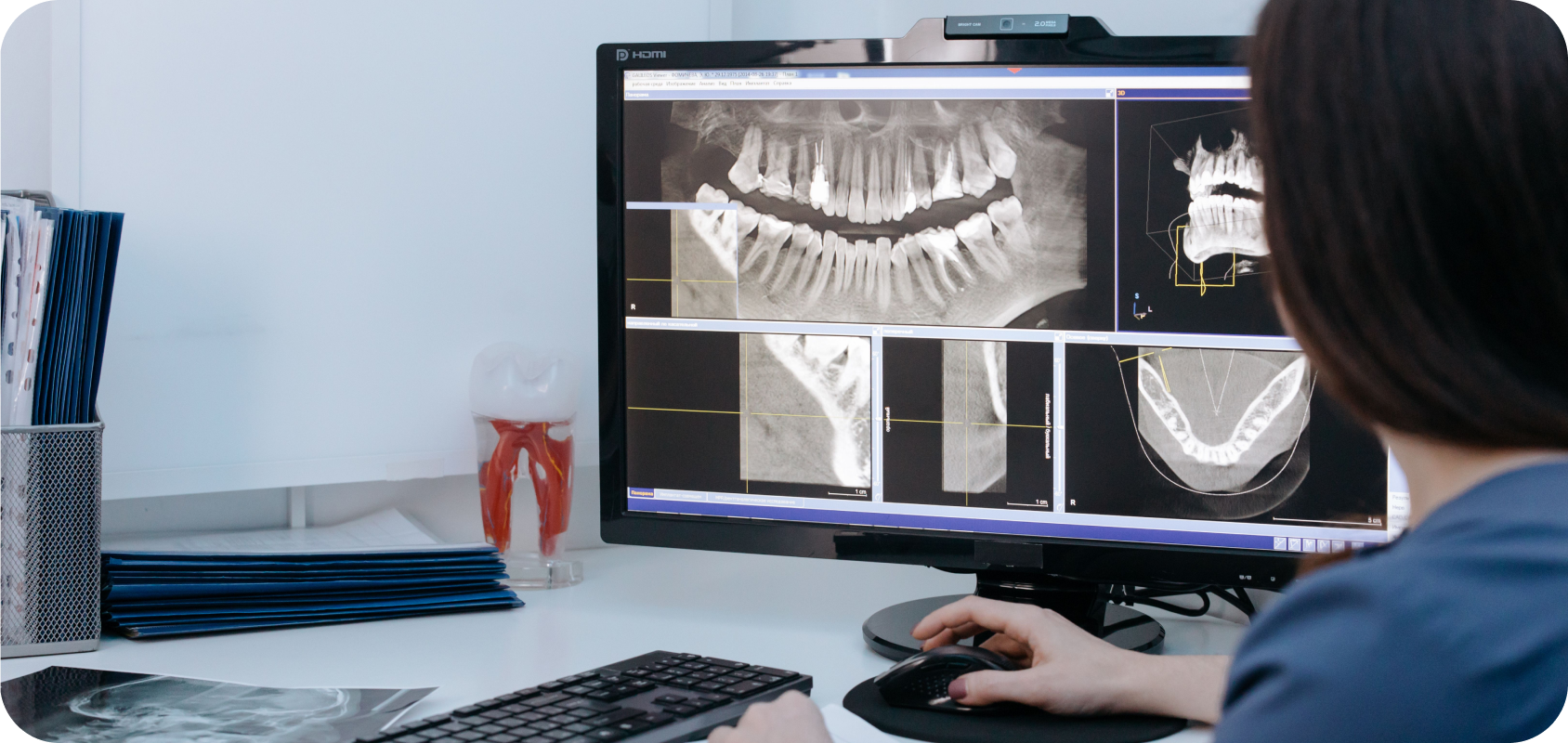
The paper introduces a training methodology for medical AI systems that more closely resembles the progressive task-based training process used in radiology education.
MICCAI 2024
Townim F. Chowdhury, Vu Minh Hieu Phan, Kewen Liao, Minh-Son To, Yutong Xie, Anton van den Hengel, Johan W. Verjans, Zhibin Liao
CVPR 2023 · IEEE/CVF Conference on Computer Vision and Pattern Recognition
Qingjie Zeng, Yutong Xie, Zilin Lu, Yong Xia